
Our colour and writing products are manufactured in our workshops in Geneva since 1915.

KNIFE PAINTING: CREATE TEXTURED AND EXPRESSIVE WORKS WITH ACRYLIC PAINT
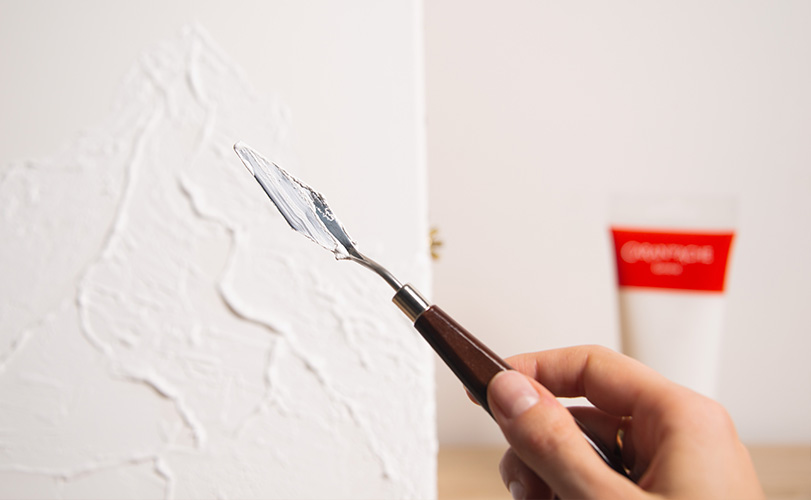
How about putting down the paintbrush and exploring texture with the tip of a blade?
Painting with a knife or with a palette knife offers a whole new way of painting with acrylic paint: more gestural, instinctive and daring. With a single movement you can create depth and vibrant textures and play with light in a way that’s not always possible with a paintbrush. While it has long been associated with experienced artists, this technique is increasingly popular with creatives looking for spontaneity.
WHY PAINT WITH A KNIFE?
Choosing knife painting is choosing freedom of movement and direct contact with your chosen media. Where a paintbrush glides delicately, a painting knife or a palette knife requires more direct gestures which confer unique relief and depth to your work.
This technique is appreciated for its expressivity. It requires a certain abandon, working colours in depth, playing with relief, contrasts and light effects..
It is perfectly adapted to acrylic paint which, by virtue of its richness and density, is perfect for adding texture and conveying a sense of depth. Quick-drying, with high coverage and a malleable consistency: all these make it the perfect choice to capture textured effects. As a result, you’ll create powerful works where colour gains volume and catches the light differently.
🎨 Many artists have adopted this technique to convey raw emotion, such as Françoise Nielly known for her vibrant portraits. Knife painting is timeless, crossing ages and styles, always allowing instinct to be at the forefront.
SUPPLIES YOU’LL NEED TO START KNIFE PAINTING
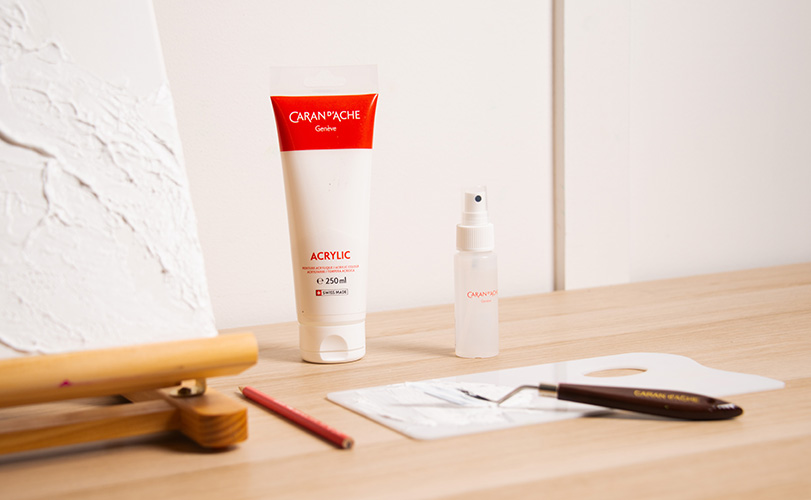
To start painting with a knife you’ll first and foremost need to choose tools which will accompany your movements and reveal the qualities of the medium. Each element (knife, paint and surface) is key in revealing textures, contrasts and the energy of the work.
A painting knife or a palette knife becomes the extension of your hand. Choose it according to the shape (pointed, flat or curved), the flexibility of the blade and its size and shape. It allows you to apply the paint in large swathes or in fine lines, to superimpose and to scrape, giving depth and movement to your composition.
As for the acrylic paint itself, it needs to be simultaneously dense and creamy to create both thick layers and subtle gradients.
A painting knife or a palette knife becomes the extension of your hand. Choose it according to the shape (pointed, flat or curved), the flexibility of the blade and its size and shape. It allows you to apply the paint in large swathes or in fine lines, to superimpose and to scrape, giving depth and movement to your composition.
As for the acrylic paint itself, it needs to be simultaneously dense and creamy to create both thick layers and subtle gradients.
🎨 The Caran d’Ache Acrylic range meets these requirements perfectly.
Ready-to-use, rich in pigments, water-soluble and characterised by a fluid texture that offers high coverage, it also adheres to a wide variety of surfaces (canvas, cardboard, wood, glass…). Its homogeneous satin aspect highlights the reliefs while its generous formats (80 ml and 250 ml) mean you can work the medium without compromise. A true ally for all artists who are looking for intensity and freedom.
For a matte or mixed finish, Caran d’Ache ECO Gouache can also be used with a painting knife or palette knife and works well when superimposed on dry acrylic paint. With its high pigmentation, its velvety texture and high opacity, it is perfect for contrasts and vivid colour blocks.
Ready-to-use, rich in pigments, water-soluble and characterised by a fluid texture that offers high coverage, it also adheres to a wide variety of surfaces (canvas, cardboard, wood, glass…). Its homogeneous satin aspect highlights the reliefs while its generous formats (80 ml and 250 ml) mean you can work the medium without compromise. A true ally for all artists who are looking for intensity and freedom.
For a matte or mixed finish, Caran d’Ache ECO Gouache can also be used with a painting knife or palette knife and works well when superimposed on dry acrylic paint. With its high pigmentation, its velvety texture and high opacity, it is perfect for contrasts and vivid colour blocks.
When it comes to the surfaces, it is best to opt for stable and absorbent materials such as Caran d’Ache mixed media paper drawing pads or primed canvases. The paint will adhere well to these surfaces, even when applied in thick layers.
Lastly, remember these essential supplies:
• A palette, Acrylic paintbrushes for details and finishing touches,
• A spray bottle to reactivate the paint,
• Cleaning tools to maintain every instrument’s longevity.
• Cleaning tools to maintain every instrument’s longevity.
BASIC TECHNIQUES AND GESTURES FOR KNIFE PAINTING
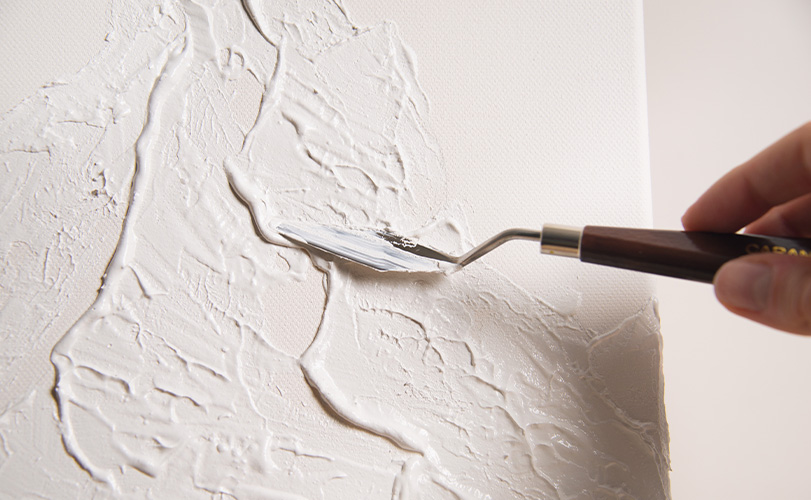
Knife painting or painting with a palette knife doesn’t follow a set of rules. It’s mainly about intuition, movement and expression. That said, a few simple techniques will help you gain confidence and master your medium.
Apply, smooth, scratch and superimpose: with just one tool it is possible to apply the paint, fold it or remove it. Using the flat side of the painting knife or palette knife you’ll obtain large swathes that are smooth and satiny. With the edge or the tip you can create clear lines, details or a ridged effect. It is also possible to mix colours directly on the surface for bold transitions and vibrant textures.
Thanks to the creamy texture and high coverage of Caran d’Ache acrylic paint, these gestures are perfectly adapted. The acrylic paint immediately adheres to the surface and works well with successive layering. It makes it possible to play with transparency or density of colours, according to the amount of paint used and the pressure exerted. It’s also possible to enrich the paint by adding other media or by combining the acrylic paint with gouache for a more matte finish, especially in areas of contrast.
Apply, smooth, scratch and superimpose: with just one tool it is possible to apply the paint, fold it or remove it. Using the flat side of the painting knife or palette knife you’ll obtain large swathes that are smooth and satiny. With the edge or the tip you can create clear lines, details or a ridged effect. It is also possible to mix colours directly on the surface for bold transitions and vibrant textures.
Thanks to the creamy texture and high coverage of Caran d’Ache acrylic paint, these gestures are perfectly adapted. The acrylic paint immediately adheres to the surface and works well with successive layering. It makes it possible to play with transparency or density of colours, according to the amount of paint used and the pressure exerted. It’s also possible to enrich the paint by adding other media or by combining the acrylic paint with gouache for a more matte finish, especially in areas of contrast.
Here are some techniques to experiment with:
• Thick layering: apply a large amount of paint and shape it for an expressive relief effect.
• Partial scraping: remove some of the paint to bare the underlying layers of colour or create worn effects.
• Dry application: work the paint with hardly any load for a textured and grainy effect.
• Apply layers onto wet or dry paint: vary and play with drying times for a range of effects (blends or sharp contrasts).
• Thick layering: apply a large amount of paint and shape it for an expressive relief effect.
• Partial scraping: remove some of the paint to bare the underlying layers of colour or create worn effects.
• Dry application: work the paint with hardly any load for a textured and grainy effect.
• Apply layers onto wet or dry paint: vary and play with drying times for a range of effects (blends or sharp contrasts).
OUR ADVICE WHEN STARTING KNIFE PAINTING
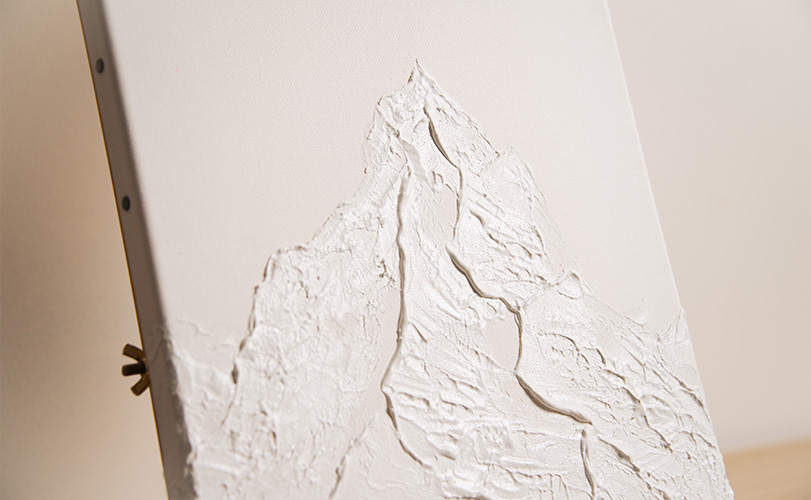
As with any expressive technique knife painting, or painting with a palette knife, requires a little daring as well as observation and perseverance. The aim is not for perfect lines but the intensity of the gestures used. Here are some tips to start confidently.
• Start simple: a single colour for the background, two or three colours, one painting knife or palette knife. This will allow you to concentrate on the sensations and gestures as well as the way the paint works.
• Play around with quantities: with too little paint, the knife will slide without leaving any colour; with too much paint the colour becomes difficult to manage. With the Caran d’Ache Acrylic range, you will find an excellent balance between a fluid and dense texture that makes it easy to learn how to dose your paint.
• Observe how it dries: acrylic paints dry fast, but not instantly. This allows you to experiment with layering and blending.
• Work in series: experiment painting the same subject but with different gestures, knives or colour combinations. An excellent way to perfect your individual style.
• Maintain your tools: immediately cleaning your painting knives and palette knives will make them last longer and work better with the paint.
Knife painting or painting with a palette knife is an invitation to release your creative liberty, where every gesture leaves an impression. So now it’s over to you: let your intuition take over, explore textures and give depth and relief to your ideas!
• Start simple: a single colour for the background, two or three colours, one painting knife or palette knife. This will allow you to concentrate on the sensations and gestures as well as the way the paint works.
• Play around with quantities: with too little paint, the knife will slide without leaving any colour; with too much paint the colour becomes difficult to manage. With the Caran d’Ache Acrylic range, you will find an excellent balance between a fluid and dense texture that makes it easy to learn how to dose your paint.
• Observe how it dries: acrylic paints dry fast, but not instantly. This allows you to experiment with layering and blending.
• Work in series: experiment painting the same subject but with different gestures, knives or colour combinations. An excellent way to perfect your individual style.
• Maintain your tools: immediately cleaning your painting knives and palette knives will make them last longer and work better with the paint.
Knife painting or painting with a palette knife is an invitation to release your creative liberty, where every gesture leaves an impression. So now it’s over to you: let your intuition take over, explore textures and give depth and relief to your ideas!

Free from CHF 80 purchase.
Possible return under 14 days.
Possible return under 14 days.







Monday to Friday from 10am to 7pm and Saturday from 10am to 5pm.
+41 (0) 848 558 558
(Calls from Switzerland : at local rate. Calls from abroad : at telecom provider’s international rate.)
+41 (0) 848 558 558
(Calls from Switzerland : at local rate. Calls from abroad : at telecom provider’s international rate.)

Create an account to benefit from all the exclusive advantages of our loyalty program.
Choose your online shop based on which country your order will be sent to
 Switzerland
Let’s stay in touch
Subscribe to our newsletter and benefit from a 10% discount on your next order.