
Our colour and writing products are manufactured in our workshops in Geneva since 1915.

A guide to painting with gouache: Tips and techniques
Gouache is a water-based paint with a wide range of applications. It is similar to watercolour in that it can be reactivated with water and reworked, but it contains a chalk that gives it higher coverage and opacity. It leaves a soft, flat, matte finish and is easier to work with than acrylic paints. Gouache is well loved by both children and professional artists for its ability to create detail and bring depth and texture to a painting.
Whether you are a beginner or an experienced hobbyist, this guide will help you discover how to choose your materials, mix colours, and begin painting with gouache.
You will need:
● brushes of different sizes. One practical option is to use water brushes, which have a built-in water reservoir
● a cup of water for rinsing your brushes and diluting the paints (remember to change the water regularly)
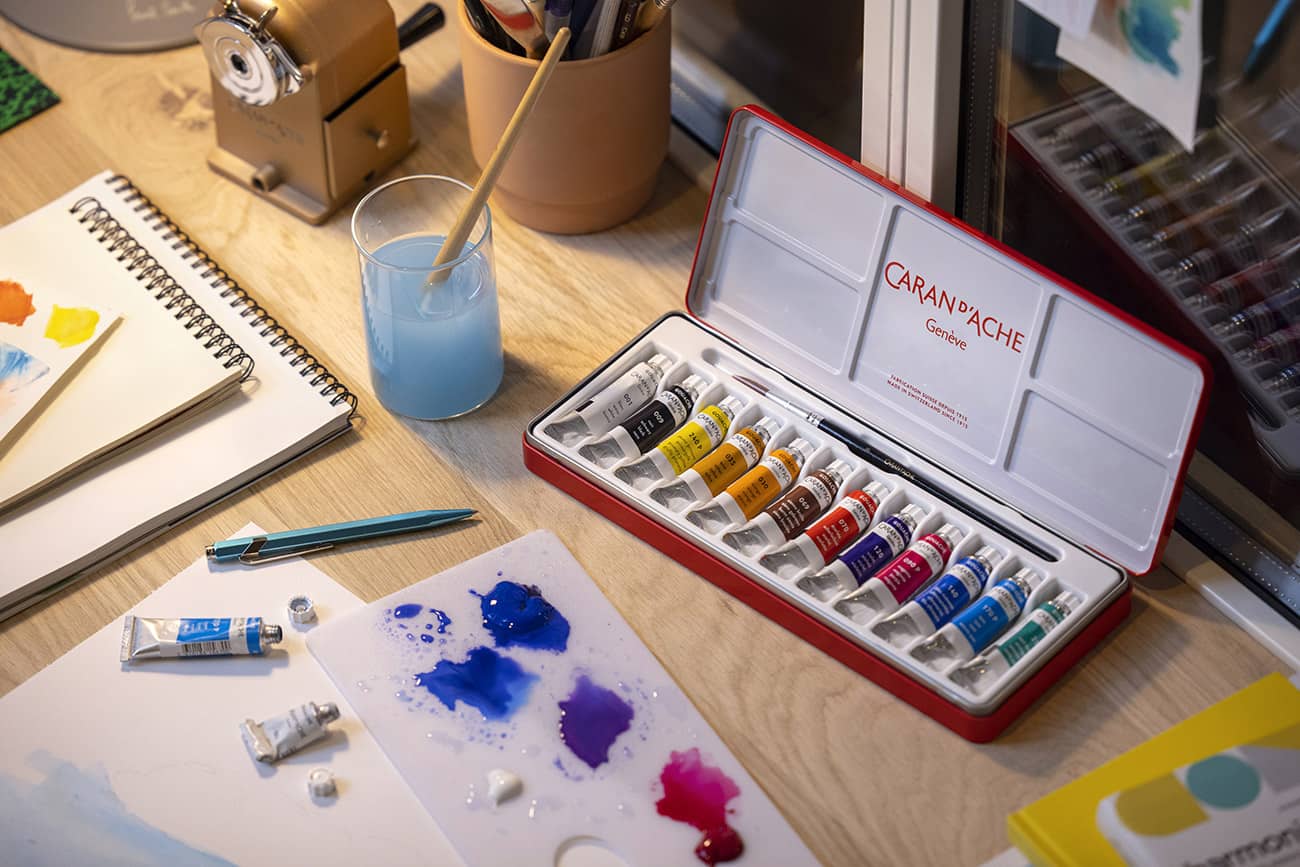
● a mixing palette for combining paints to create new shades and for thinning the paint. Your mixed paints can be saved for later use.
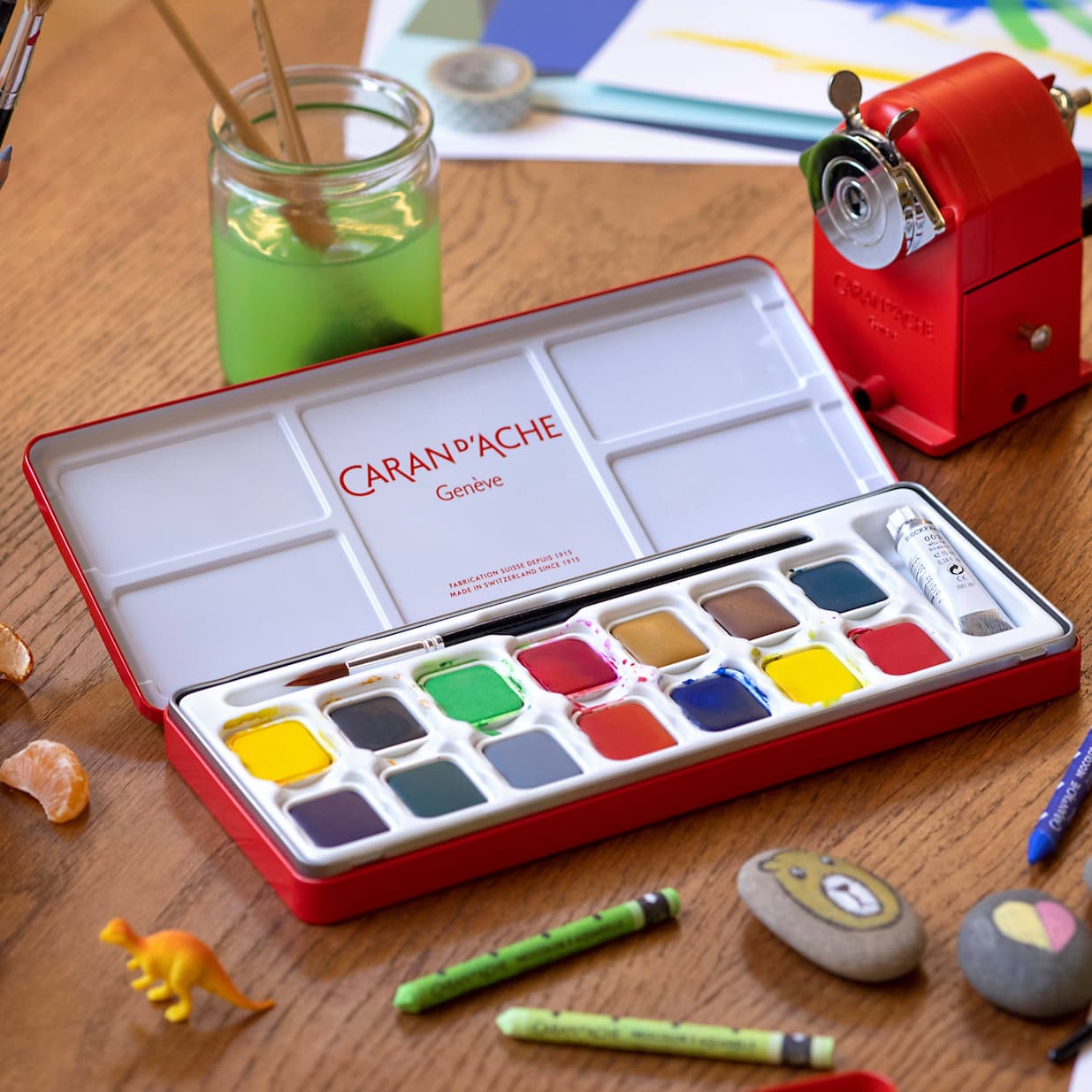
Note: The lid of the Caran d'Ache Gouache Colour Tablets Box Set is designed for mixing and storing your paints so you can use them over and over again. To reuse, simply moisten your brush and pick up the colour.
● a stand
● a smock to protect your clothes
● a work surface that is stable, flat and protected
● gouache in tubes, bottles or a dry palette
Tip: Always keep on hand a tube of white gouache for brightening up your paintings with subtle accents that will create depth and relief.
Whether you are a beginner or an experienced hobbyist, this guide will help you discover how to choose your materials, mix colours, and begin painting with gouache.
PREPARING YOUR MATERIALS
Supplies for painting with gouache
You will need:
● brushes of different sizes. One practical option is to use water brushes, which have a built-in water reservoir
● a cup of water for rinsing your brushes and diluting the paints (remember to change the water regularly)
● a mixing palette for combining paints to create new shades and for thinning the paint. Your mixed paints can be saved for later use.
Note: The lid of the Caran d'Ache Gouache Colour Tablets Box Set is designed for mixing and storing your paints so you can use them over and over again. To reuse, simply moisten your brush and pick up the colour.
● a stand
● a smock to protect your clothes
● a work surface that is stable, flat and protected
● gouache in tubes, bottles or a dry palette
Tip: Always keep on hand a tube of white gouache for brightening up your paintings with subtle accents that will create depth and relief.
©Arnaud CHILDÉRIC
Best surfaces for painting with gouache
Paint on an oil-free surface such as paper, wood, canvas, stone or clay. Results will be different depending on your surface type.
When painting on paper, pay special attention to its quality. Paper with a weight less than 250 g tends to curl in reaction to the water used to dilute the gouache. A paper suitable for almost any creative media, wet or dry, is the versatile 250 g/m2 paper in Caran d'Ache's mixed media drawing pads. These are available in A3, A4 and postcard sizes.
©Arnaud CHILDÉRIC
On non-paper surfaces, it is recommended to apply a layer of Gesso undercoating to improve the paint’s ability to adhere to the surface without being absorbed into it.
Choosing what kind of gouache to use
Gouache is available in tubes, bottles or dry tablets.
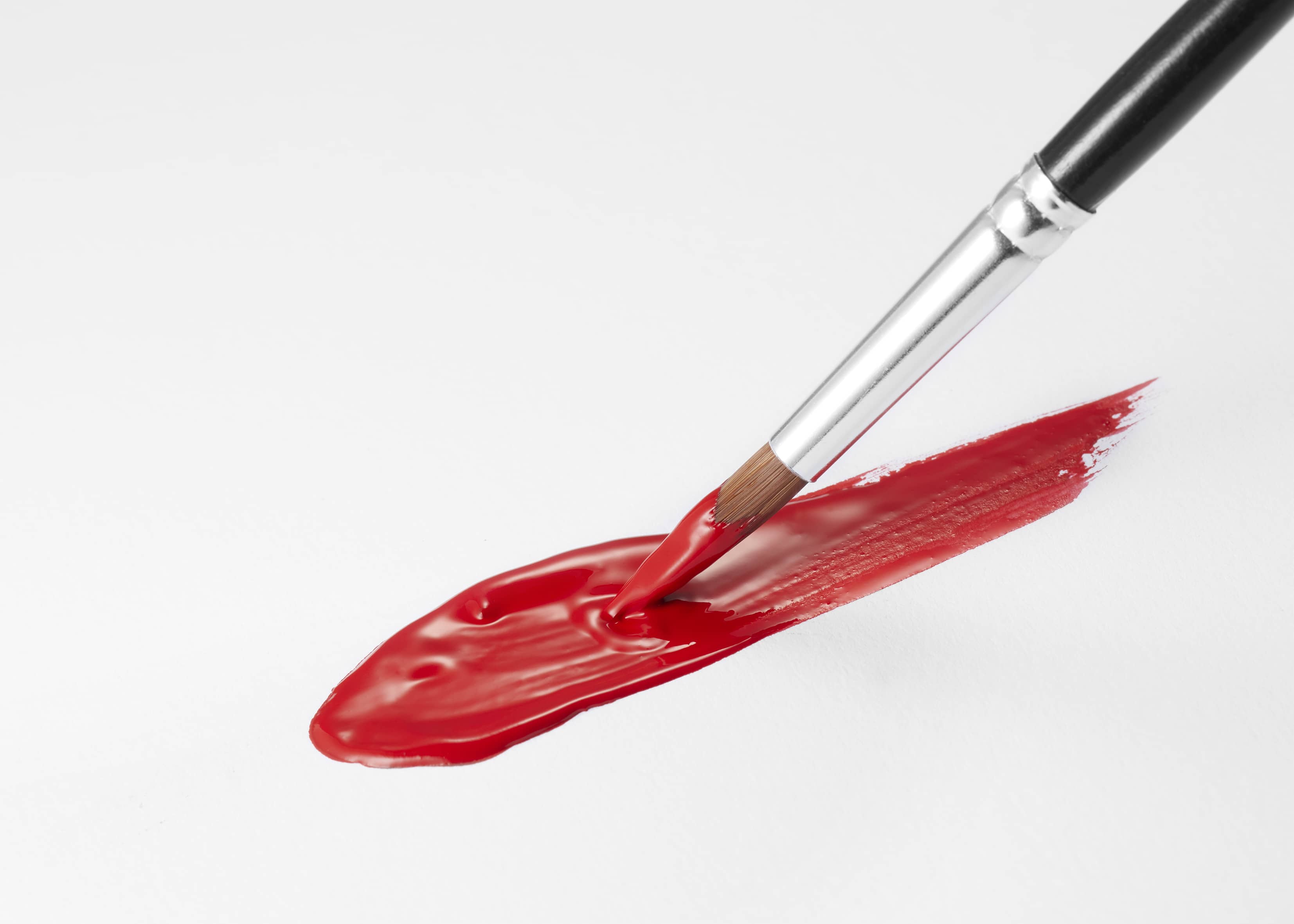
Gouache that comes in a tube or bottle can be employed directly to create even and full-bodied layers of colour. You can also dilute it with water to reduce its coverage and opacity until you reach your desired effect. Gouache in tubes or bottles is versatile and perfect when you are looking for high coverage.
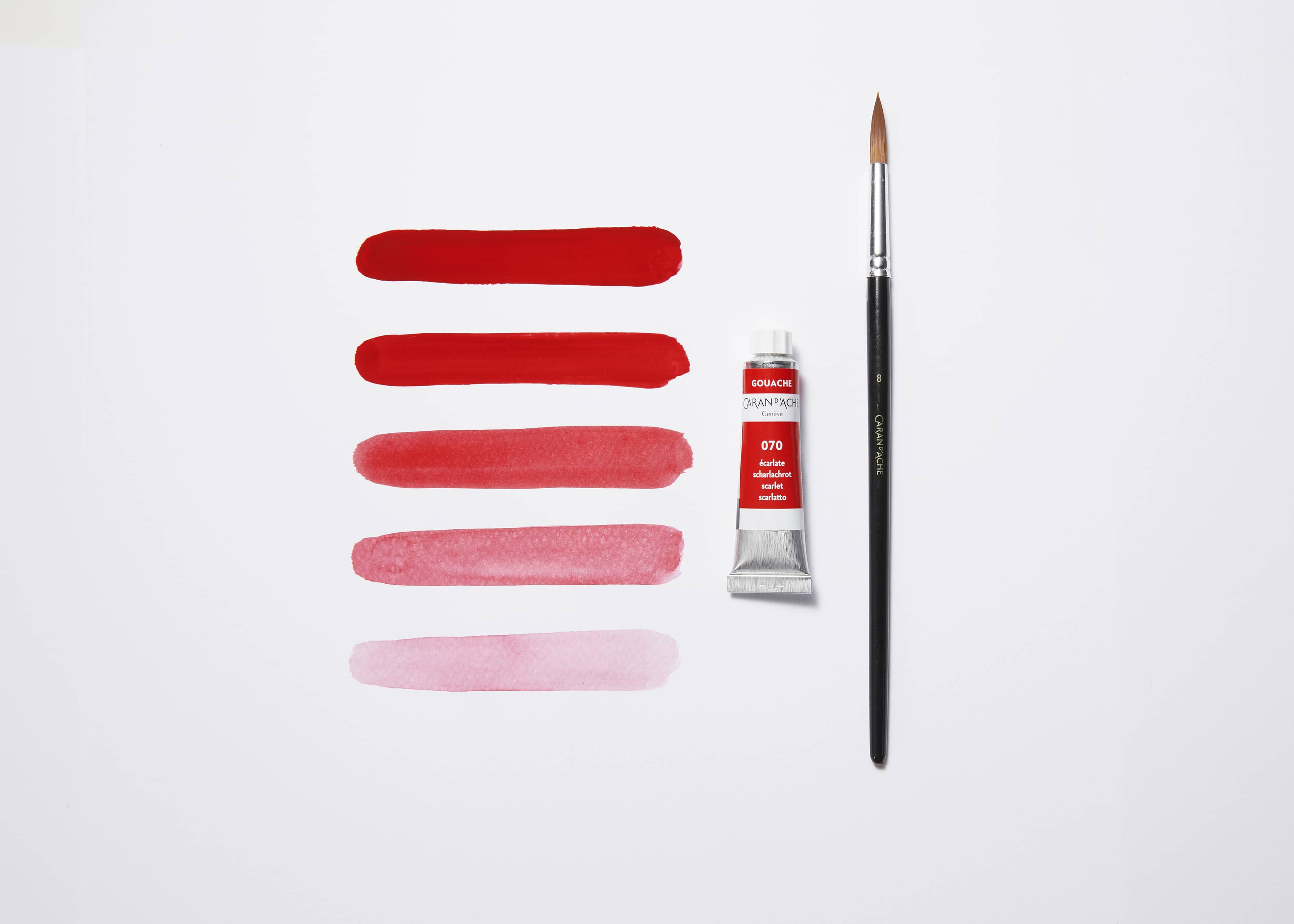
Caran d'Ache gouache is a true 2-in-1 paint: Used with sufficient amounts of water, it will yield an effect like watercolour. With little or no water, it is opaque.
When painting with dry tablets, you will use a wet brush to collect colour from the tablet and apply it to your painting surface. Gouache tablets are ideal for painting on paper. They come in palettes that are convenient for carrying for use in classes, workshops, or outdoors in nature. Dry tablets will offer slightly less coverage than gouache in tube or bottle format.
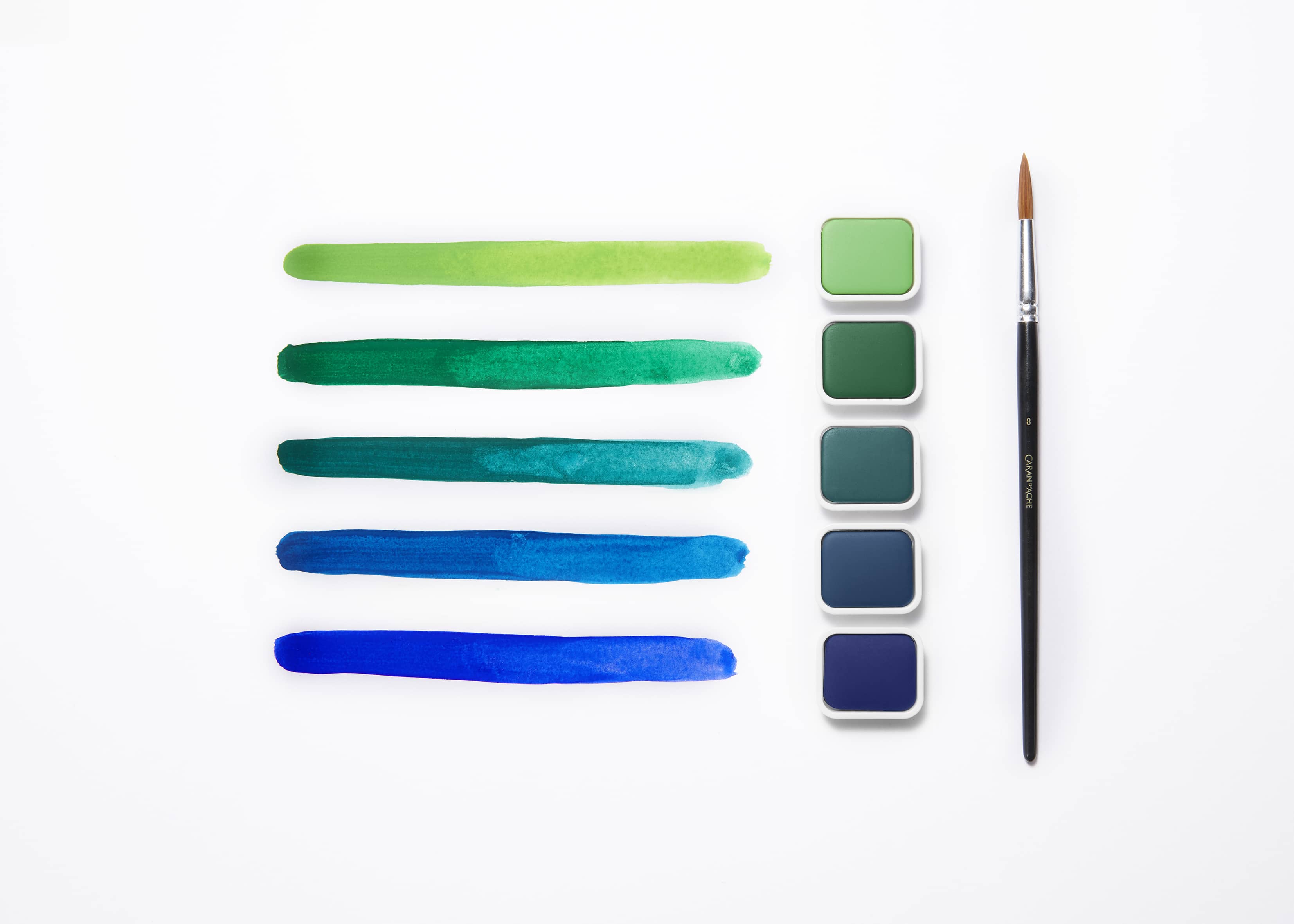
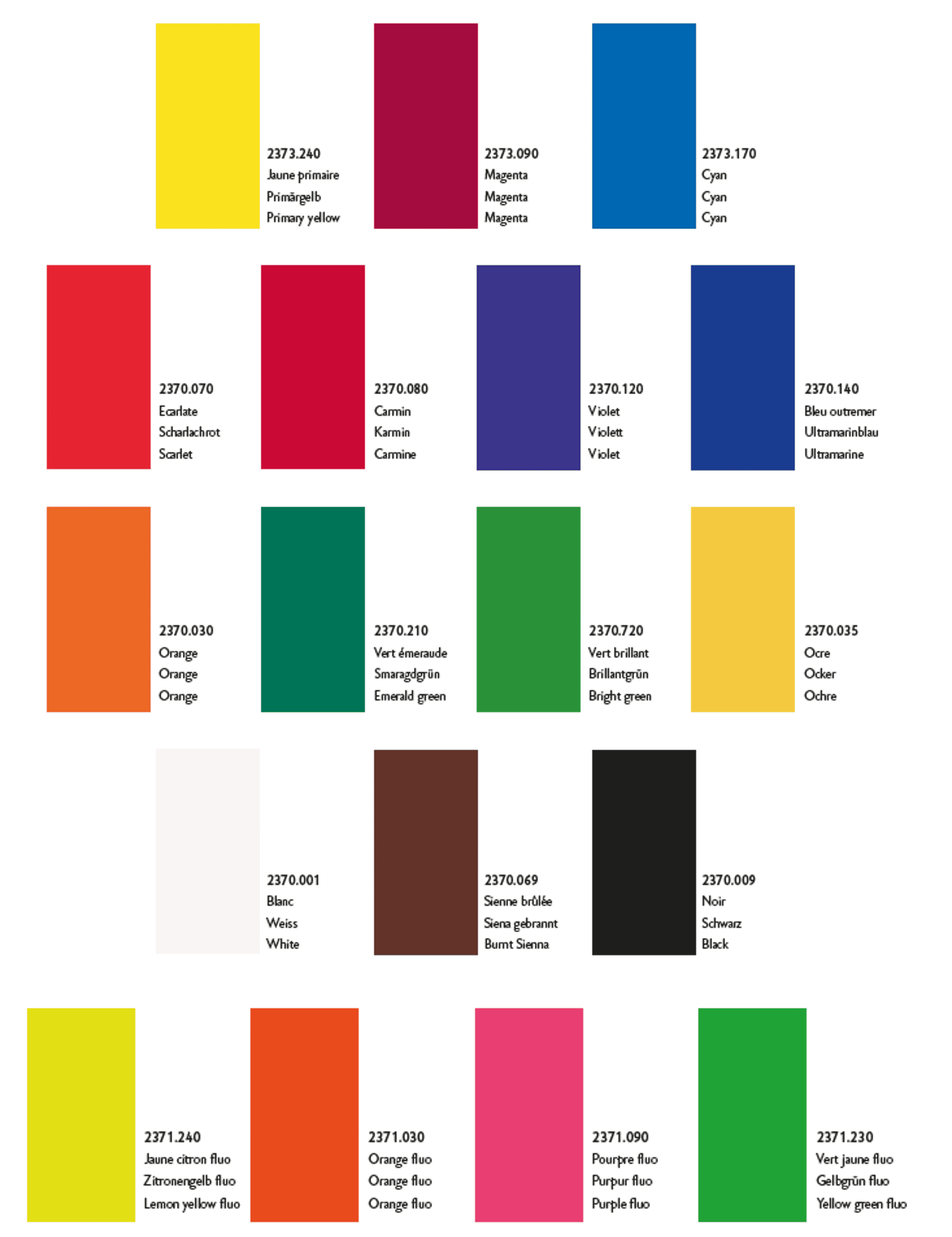
Did you know? Caran d’Ache’s selection of 18 gouache colours, four of which are fluorescent, is entirely made in Switzerland using more than 80% naturalingredients. With ultra-bright colours and a matte appearance when dry, these high-coverage paints are very economical (500 ML = 2.5 L).
BASIC GOUACHE PAINTING TECHNIQUES: GETTING STARTED
Gouache is worked differently than other paints. Because it is very fluid, it is typically applied on a flat, horizontal work surface rather than a vertical one. Before painting, a simple approach is to start by making a pencil sketch. Then paint the washes and blocks of colour. Add in detail as a last step.
Tip: Because of its smooth and velvety texture, Caran d'Ache gouache will never crack. This quality allows you to use thick, cumulative layers of paint.
Useful terminology
Colour blocking refers to creating areas of uniform, opaque colour on a painting’s surface.
A wash, in contrast, is an area of transparent colour.
A wash, in contrast, is an area of transparent colour.
Painting flat blocks of colour
● Dilute the gouache with water to obtain a homogeneous, creamy texture.
● Load your brush with enough paint to avoid streaking or having to refill it during a stroke. For larger surfaces, work in successive bands across the surface.
Our advice: Add a small amount of white to your paint to increase coverage.
Creating washes
● Dilute the gouache with plenty of water to reduce its opacity and obtain tones similar to watercolour.
● Wet your paper or surface with clean water. This way, the pigments will absorb less directly into the paper and the brush strokes will be invisible.
For a gradient effect, work in bands across the surface, adding more water to the paint as you go along so that each new layer will blend into the previous one.
Our advice: Combine wash and solid colour block techniques to play with texture and effect.
Adding fine detail and the finishing touches
To add more precise detail to your gouache painting, select a thin brush and saturate it only lightly with paint. Use it to trace the image’s finer shapes and outlines. These finishing touches will create depth and bring out the play of light and shadow in the painting.
Once your work is finished, let it dry and then varnish it with a special gouache varnish. The varnish will both protect it and enhance its tones. But be aware that once the varnish has been applied, you will not be able to rework the painting. You can frame your painting behind glass to better protect it. For best protection, avoid exposing it to direct sunlight.
If you painted on wood, protect the dry gouache by painting over it with a thin layer of linseed oil.
Gouache paints can be mixed to create an almost-limitless number of shades. When selecting your paints, you can pick out a gouache paint set of premixed colours or choose only the primary colours plus white and black and create all your own shades.
Final tip: Clean-up is easy with gouache. Use soapy water to remove it from your equipment, work surfaces and clothes.
If you painted on wood, protect the dry gouache by painting over it with a thin layer of linseed oil.
MIXING GOUACHE PAINTS TO CREATE NEW COLOURS AND SHADES
Gouache paints can be mixed to create an almost-limitless number of shades. When selecting your paints, you can pick out a gouache paint set of premixed colours or choose only the primary colours plus white and black and create all your own shades.
Final tip: Clean-up is easy with gouache. Use soapy water to remove it from your equipment, work surfaces and clothes.

Free from 80€ purchase.
Possible return under 14 days.
Possible return under 14 days.





Monday to Friday from 10am to 7pm and Saturday from 10am to 5pm.
+41 (0) 848 558 558
(Calls from Switzerland : at local rate. Calls from abroad : at telecom provider’s international rate.)
+41 (0) 848 558 558
(Calls from Switzerland : at local rate. Calls from abroad : at telecom provider’s international rate.)

Create an account to benefit from all the exclusive advantages of our loyalty program.
Choose your online shop based on which country your order will be sent to
 Japan
Japan
 Switzerland
Let’s stay in touch
Subscribe to our newsletter and benefit from a 10% discount on your next order.