
Our colour and writing products are manufactured in our workshops in Geneva since 1915.

HOW TO USE A BLENDING STUMP AND A PENCIL BLENDER IN DRAWING
Between two pencil strokes, a well-blended gradient can make all the difference. This is where two discreet but essential tools come into play: blending stumps and pencil blenders. The first softens graphite or charcoal lines, the other blends colours for a velvety finish. Together, they give a work a sense of depth and realism.
It is necessary to know how to use them without saturating the paper or losing the crispness of your lines. Caran d'Ache gives you a step-by-step guide to mastering the art of blending and enhancing your drawings, from sketches to portraits.
It is necessary to know how to use them without saturating the paper or losing the crispness of your lines. Caran d'Ache gives you a step-by-step guide to mastering the art of blending and enhancing your drawings, from sketches to portraits.
BLENDING STUMPS: THE ESSENTIAL TOOL FOR ARTISTS TO BLEND LINES
What is a blending stump?
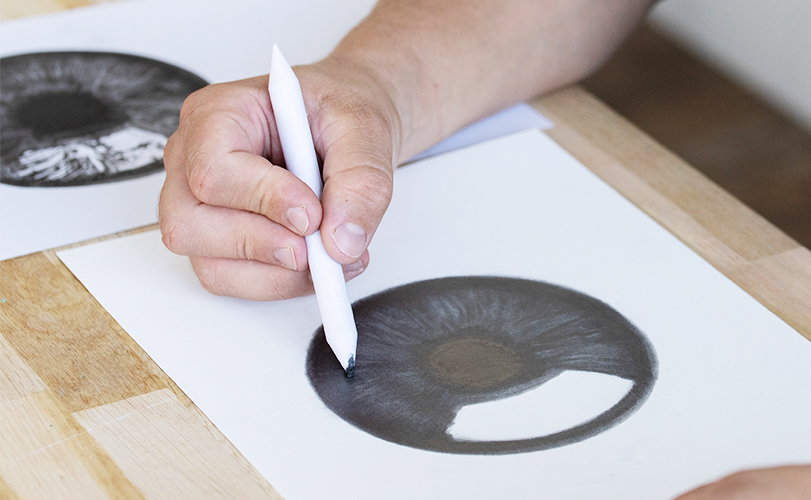
A well-known tool in fine arts, a blending stump is a cylindrical tool made of very tightly rolled-up compressed paper, with a pointed tip at each end. Its slightly rough texture allows graphite, charcoal, pastel or even coloured pencil pigments to blend together, creating soft, even gradients.
Endlessly reusable, it is an essential part of any artist's drawing supplies, particularly for softening shadows or blurring outlines without damaging the paper.
At Caran d'Ache, our blending stumps come in two lengths: 70 mm and 140 mm. Their texture offers a comfortable grip and smooth control for natural blends, whether for sketching, nudes or portraits.
How to use your blending stump correctly
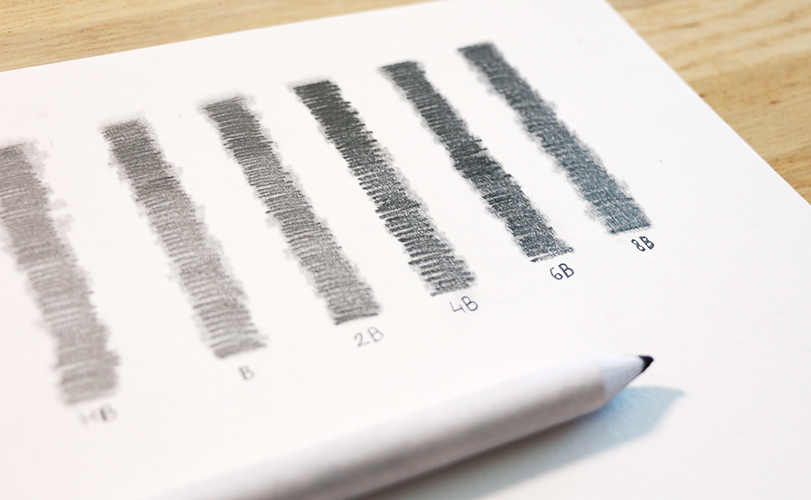
To get the most out of your blending stump, a light touch is essential. There is no need to press down: use small circular movements or rub lightly to gradually blend the graphite or pigments.
Always work on the light areas first before moving on to the darker ones. This prevents smudging and keeps the shades distinct.
Blending stumps are particularly well suited for:
• soft shadows on faces or folds,
• subtle gradations in backgrounds,
• softening contours for a more natural look.
Tip: To emphasise volume, alternate between blending, adding touches of pencil and white highlights.
This play of contrasts will help convey a sense of depth without any “blurry effect”.
This play of contrasts will help convey a sense of depth without any “blurry effect”.
Looking after your blending stump
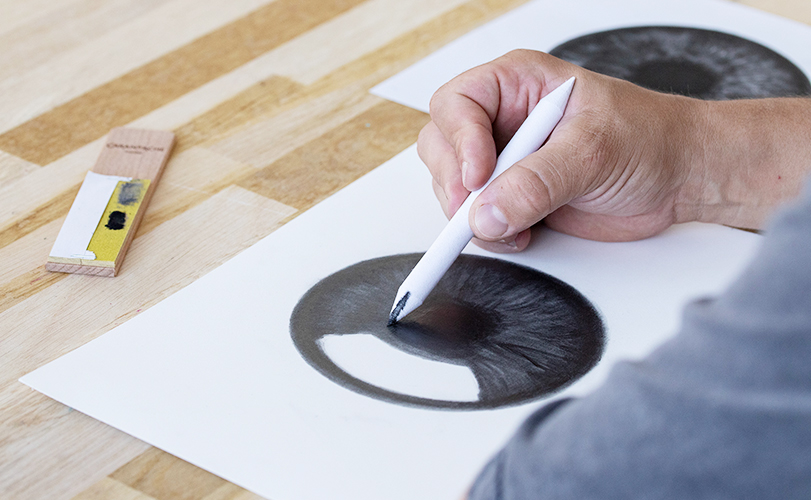
After several uses, your blending stump will naturally accumulate graphite or coloured pigments. Here are a few steps to follow:
• Gently rub the tip on sandpaper or a nail file to remove any residue.
• You can sharpen the tip of your blending stump with a pencil sharpener to restore its original precision.
• Finally, a white eraser may be sufficient to remove excess pigment.
BLENDER PENCILS: THE FINISHING TOUCH FOR A SMOOTH FINISH
What is a blender pencil?
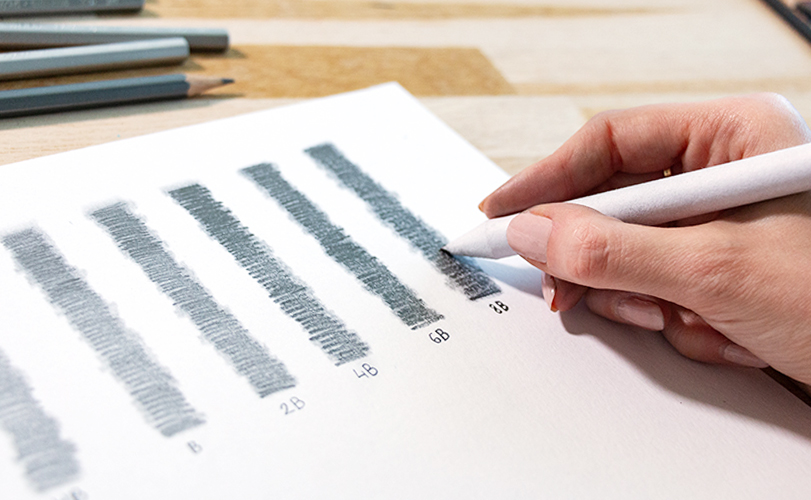
A pencil blender allows you to blend, unify and intensify colours in a drawing. Unlike a blending stump, it does not move any matter but acts directly on the pigments to smooth them, blend them and create a more uniform finish. The result: pencil lines disappear, transitions become smoother and colours become more vibrant. It is mainly used with coloured pencils, but some kinds are also suitable for techniques that use watercolour or felt-tipped pens.
At Caran d'Ache, the Full Blender Bright is the perfect addition to any artist's kit: it blends colours, intensifies pigments and ensures a professional finish. This colourless pencil is a binder made of wax and oil, and contains no pigments.
Its hexagonal shape offers a comfortable grip, ideal for precise blending, while its concentrated formula makes it very economical to use. Versatile, it can be used with permanent coloured pencils as well as watercolour pencils, on dry or slightly damp paper. The perfect tool for lovers of drawing or fine arts.
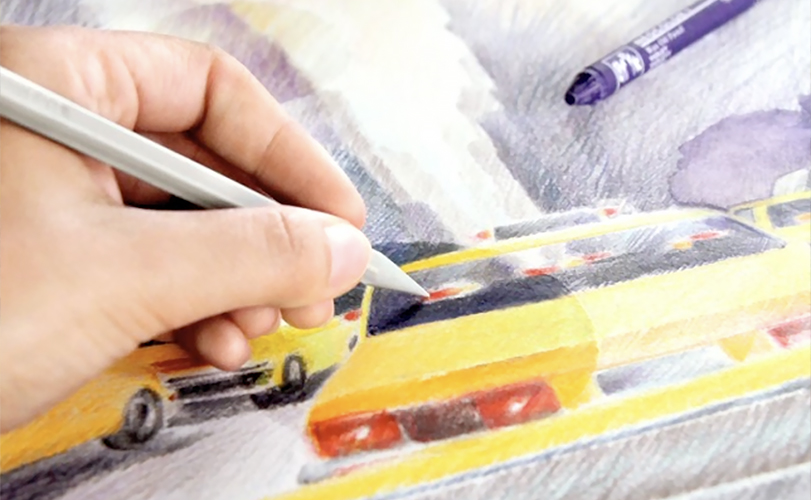
Techniques for using a pencil blender
The blender pencil should be applied after laying down layers of colour, using small circular or linear strokes depending on the desired texture.
On a pencil drawing, the blender pencil allows you to:
• blend colours without altering them,
• soften visible pencil lines,
• create subtle gradients, especially in areas of light.
• soften visible pencil lines,
• create subtle gradients, especially in areas of light.
The result? Blended, bright and harmonious colours.
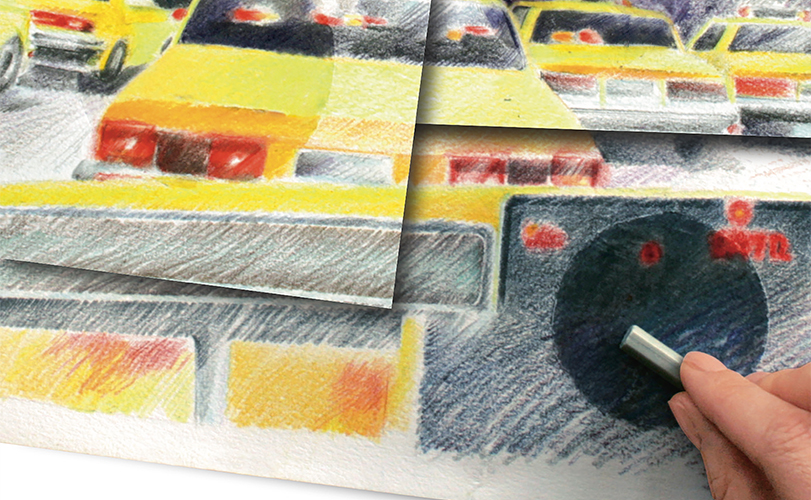
3 mistakes to avoid with a pencil blender
1. Do not press down too hard: this may damage the paper or saturate the surface with wax or ink.
2. Avoid paper that is too thin or too damp: the liquid blender can damage it or smudge it.
3. Do not go over the same area too many times: successful blending is achieved through delicate application, not thick layers.
ARTISTS' TIPS FOR MASTERING BLENDING
• Opt for fine or medium-grain paper for even blending.
• Work in light layers rather than go over it once.
• Observe natural light to determine the right amount of shadows and transitions.
• Experiment with sketching before moving to the final version.
• Alternate between pencil and blending to create depth without saturating the paper.
BLENDING STUMP OR PENCIL BLENDER: WHICH DRAWING TOOL SHOULD YOU CHOOSE?
It all depends on the desired result and the medium you are using.
For graphite, charcoal or dry pastel drawings, a blending stump is your best ally: it softens shadows and blends lines while maintaining a matte, textured appearance.
If, on the other hand, you want a smoother, glossier and more even finish, especially with coloured pencils, opt for a pencil blender. It blends pigments, intensifies colours and gives a more satin finish.
For over a century, Caran d'Ache has been putting its expertise at the service of artists, fine arts students and all drawing enthusiasts. True to its tradition of excellence, the Swiss company designs and selects the supplies needed to perfect personal technique, encourage creativity and allow everyone to fully express their art.
Would you like to go further? Discover the Creative Class by Caran d'Ache.

Free from 199$ purchase.
Possible return under 14 days.
Possible return under 14 days.







Create an account to benefit from all the exclusive advantages of our loyalty program.
Choose your online shop based on which country your order will be sent to
 Switzerland
Let’s stay in touch
Subscribe to our newsletter and benefit from a 10% discount on your next order.